
Types of Emergency Lighting Solutions
Emergency lighting systems can be installed in different ways depending on the building layout, use, escape routes and fire risk assessment. The correct type of emergency lighting helps ensure that occupants can safely evacuate the building if the normal lighting supply fails.
Maintained emergency lighting operates as part of the normal lighting system and remains illuminated during everyday use. If the mains supply fails, the fitting continues to operate from its emergency battery backup. Maintained fittings are commonly used in areas where lighting needs to remain on at all times, such as communal corridors, stairwells, public areas and escape routes.
Non-maintained emergency lighting only operates when the normal lighting supply fails. These fittings remain off during normal conditions and automatically illuminate during a power failure. Non-maintained fittings are commonly used in escape routes, plant rooms, stores, back-of-house areas and other locations where emergency illumination is only required during loss of supply.
Self-contained emergency lights include an internal battery within the fitting. These are commonly used across residential blocks, commercial premises and managed properties due to their straightforward installation and maintenance requirements.
Self-test emergency lighting can automatically carry out routine function checks and indicate faults. This can help simplify maintenance and identify failed batteries, lamps or fittings more quickly. However, regular records and inspections are still important to support compliance.
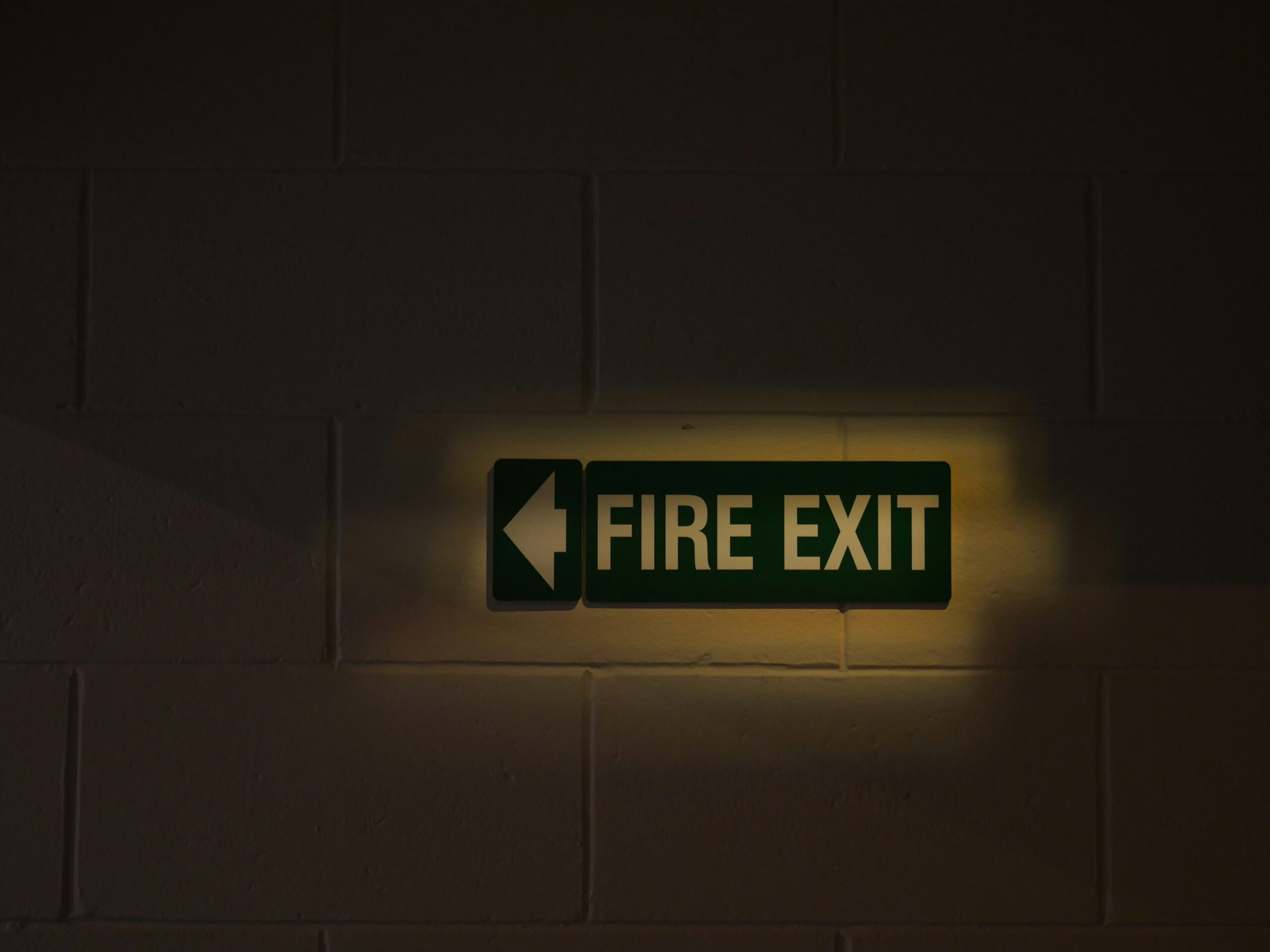
Emergency lighting may include bulkhead fittings, recessed fittings, twin spots, illuminated exit signs, maintained exit boxes and integrated emergency lighting within standard luminaires. The correct solution will depend on the area being protected and the required escape route coverage.
Corevia Group can supply, install, test, maintain and repair emergency lighting systems for landlords, managing agents, housing providers, commercial clients and residential blocks.
Regulatory Compliance and Safety Standards
Emergency lighting should be designed, installed, tested and maintained in line with relevant fire safety requirements and British Standards. In the UK, BS 5266-1 provides guidance for emergency lighting systems, including escape routes, open areas and high-risk task areas.
Emergency lighting is also an important consideration under fire safety legislation and should be reviewed as part of the building’s fire risk assessment. The responsible person or duty holder should ensure that suitable emergency lighting is provided and maintained where required.
Regular testing is essential to confirm that emergency lighting operates correctly when needed. This may include routine functional testing, periodic duration testing and keeping records of test results, faults and remedial works.
Common emergency lighting defects include failed batteries, damaged fittings, missing or incorrect exit signage, insufficient coverage, no test records, fittings not charging, lamps not operating and units not lasting the required duration during testing.
Where defects are identified, remedial works should be completed promptly to maintain safe escape routes and support compliance records.
Corevia Group provides emergency lighting testing, maintenance, installation and remedial works. We can provide clear findings, photographs, recommendations and follow-on quotations where further works are required.
Why Choose Corevia Group for Emergency Lighting?
Corevia Group provides emergency lighting services for residential blocks, landlords, managing agents, housing providers, commercial premises and domestic properties where required.
Our services include emergency lighting installation, replacement fittings, testing, maintenance, fault finding, battery replacement, exit signage checks and remedial works following inspection or fire risk assessment findings.
We understand the importance of safe escape routes and clear compliance records. Our approach is focused on practical recommendations, reliable attendance, clear communication and completing works safely.
For managed properties and commercial clients, we can provide photographic evidence, job notes, test results and remedial recommendations to support maintenance files, fire safety records and client sign off.
Whether you require a new emergency lighting installation, annual testing, repairs to failed fittings or follow-on works from a fire risk assessment, Corevia Group can provide a practical and professional service.
Contact Corevia Group today to arrange emergency lighting installation, testing, maintenance or remedial works.